What to Do After an Uber or Lyft Accident in New Jersey

If you are hurt as an Uber or Lyft passenger in New Jersey, the good news is that you are almost always covered, either by the rideshare company's policy or the at-fault driver's. The complicated part is figuring out which one pays, because that turns entirely on what the driver was doing when the crash happened, whether the app was off, on and waiting, or actively in a ride. James Vasquez explains the steps to take after a rideshare crash, how New Jersey's tiered coverage law works once a ride is underway with up to $1.5 million in protection, how PIP fits in, and why documenting the driver's app status can be worth real money.
Rideshare is everywhere now. Uber and Lyft put hundreds of thousands of drivers on the road, and the more we all use them, the more passengers end up in crashes. The good news for passengers is that you are almost always covered, either by the rideshare company's policy or the at-fault driver's. The complicated news is that which policy pays, and how much, depends on exactly what the driver was doing when the crash happened.
New Jersey has its own rideshare law, and it carries some of the strongest insurance requirements in the country. I am a former New Jersey prosecutor who now handles injury cases in Passaic County, and here is what to do after an Uber or Lyft accident and how the coverage actually works.
What Should You Do After an Uber or Lyft Accident in New Jersey?
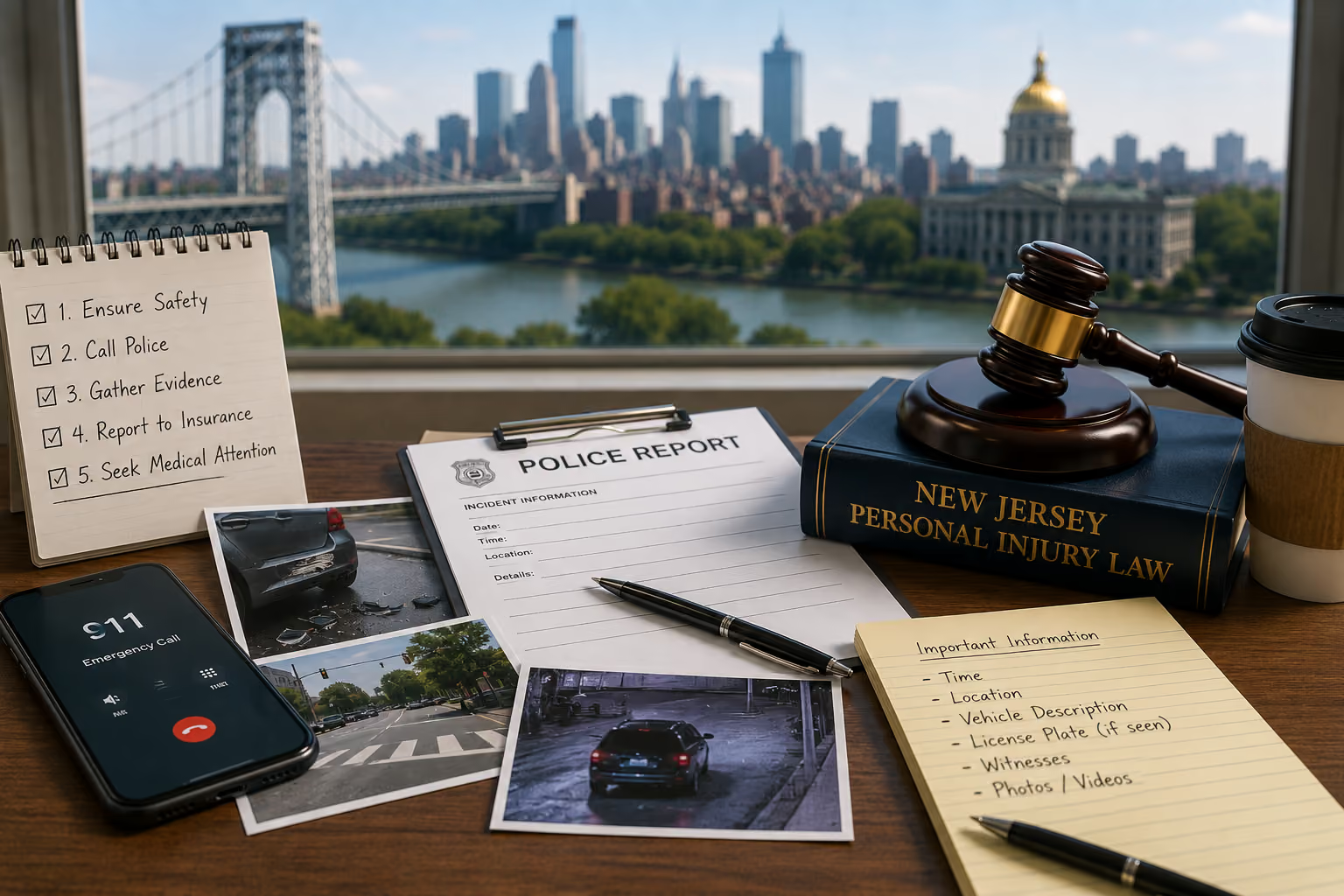
The steps are like any crash, with a few rideshare-specific additions. Get safe and get medical care first, then report the crash in the app, call the police, and document everything, including the driver's app status.
- Get to safety and get medical care. Call an ambulance if anyone is seriously hurt. Otherwise see a doctor as soon as possible, since shock can hide injuries for days.
- Report the crash in the rideshare app. Both Uber and Lyft have in-app crash reporting that creates a record and triggers their claims process.
- Call the police and get the report. An official report is central to any fault dispute.
- Collect information. The rideshare driver's name and insurance, the same for any other driver involved, and the vehicles' plates.
- Screenshot your trip. Capture the trip details, driver, and times in the app. This documents that you were a passenger and that the app was active.
- Photograph the scene and get witnesses. Damage, the location, your injuries, and names and numbers of anyone who saw it.
- Do not give a recorded statement. Not to the rideshare company's insurer or any other, until you have spoken with an attorney.
- Call an attorney. Rideshare claims involve multiple policies and adjusters who handle them daily, so early guidance matters.
Who Is Liable, and Whose Insurance Pays?
It depends on who was at fault and what the rideshare driver was doing at the time. As a passenger, you are generally covered by either the rideshare company's policy or the at-fault driver's policy, and the company's coverage is primary once a ride has been accepted or a passenger is aboard.
That last point is the key one. New Jersey's rideshare law ties the available coverage to the driver's status at the moment of the crash, so the same accident can be covered very differently depending on whether the app was off, on and waiting, or actively engaged in a ride. That is what the coverage periods below describe.
How Does Rideshare Insurance Work in New Jersey?
New Jersey's Transportation Network Company Safety and Regulatory Act sets tiered minimum coverage based on the driver's status. Once a ride is accepted or a passenger is aboard, the minimum jumps to $1.5 million in liability plus $1.5 million in uninsured and underinsured motorist coverage.
Here is the framework that governs Uber and Lyft crashes in New Jersey:
That $1.5 million figure is far above what New Jersey requires for an ordinary driver, which is why a rideshare crash with a passenger aboard is in a category of its own. The requirements come from the New Jersey Transportation Network Company Safety and Regulatory Act (N.J.S.A. 39:5H-1 et seq.), enforced through the New Jersey Motor Vehicle Commission. One note on current trends: legislation has been proposed in Trenton that could change the uninsured motorist requirement, so it is worth confirming the limits in effect when your crash occurred.
Does New Jersey No-Fault and PIP Apply to Rideshare Passengers?
Yes. New Jersey is a no-fault state, so Personal Injury Protection pays your initial medical bills and a portion of lost wages regardless of who caused the crash. Injured rideshare passengers usually file a PIP claim first, then pursue more from the rideshare or at-fault driver's coverage.
This is the same no-fault system that applies to any New Jersey car accident: PIP is the first line for medical costs, and it does not depend on proving fault. From there, you can pursue the larger rideshare or third-party coverage for the rest of your damages, including pain and suffering. Which PIP policy responds first can depend on your own coverage and the circumstances, and the details of PIP and the lawsuit options are laid out in the New Jersey Department of Banking and Insurance Consumer's Guide to Auto Insurance.
What If the Driver's App Was Off or the At-Fault Driver Was Uninsured?
If the rideshare app was off, only the driver's personal auto policy applies, not the company's coverage. If the at-fault driver was uninsured, the rideshare company's $1.5 million uninsured motorist coverage can step in while a ride was accepted or a passenger was aboard.
These two scenarios are exactly why documenting the driver's app status matters so much. When the app is off, the rideshare driver is treated like any other private driver, and the company's policy is not in play. When the app is active but the person who hit you has no insurance or not enough, the company's large uninsured and underinsured motorist coverage becomes your protection. Sorting out which coverage applies is one of the trickier parts of a rideshare claim, and getting it wrong can cost you real money.
The Bottom Line
As an Uber or Lyft passenger in New Jersey, you are well protected on paper, the company must carry $1.5 million in coverage once your ride is underway, and PIP covers your early medical costs no matter who was at fault. The hard part is matching your claim to the right policy, which turns on the driver's app status and who was at fault, and dealing with adjusters who handle these cases every day.
If you were hurt in a rideshare crash, let me sort out which coverage applies and handle the claim. The consultation is free, there is no obligation, and there is no fee unless we recover money for you.
Related Articles and Resources



Hurt in New Jersey? Let's Talk.
James Vasquez gives injured people across New Jersey a free, no obligation case review. Tell us what happened and we'll walk you through your options and what your claim may be worth.
.png)
Reach us whatever way works for you.
Need to talk to someone right now?

Areas we serve



.jpg)