Determining Fault in a Car Accident in New Jersey
New Jersey's no-fault system pays your initial medical bills and lost wages no matter who caused the crash, which leads a lot of people to assume fault does not matter here. It does. The moment you step outside PIP to sue for pain and suffering, fault decides whether you can file and how much you actually collect, and under the state's comparative negligence rule, every percentage of blame pinned on you comes straight off your recovery. James Vasquez explains how adjusters and courts weigh the evidence, why the police report and scene photos carry so much weight, and what to do in the first hours after a crash to protect a fair fault determination.
Car accidents are the leading source of personal injury claims, and on New Jersey's dense, fast roads they injure tens of thousands of people every year. If you are one of them, the first step after seeing a doctor is talking to a lawyer who knows how to handle insurers, because in New Jersey your own insurance company pays your initial medical bills and lost wages no matter who caused the crash.
That no-fault rule leads a lot of people to assume fault does not matter here. It does, just not for every part of your claim. I spent years as a New Jersey prosecutor building cases on evidence, and I bring that same approach to car accident claims in Passaic County. Here is how fault is actually determined in New Jersey and when it changes what you can recover.
How Is Fault Determined in a New Jersey Car Accident?
Adjusters and courts decide fault from the evidence, not from who argues hardest. They rely most on the police report and each driver's account, which is exactly why documenting the scene yourself is so important.
Determining liability is tricky, but adjusters do it every day, and the evidence that carries the most weight includes:
- The police report and any traffic citations issued
- Each driver's account of what happened
- Photographs of the scene, the impact point and vehicle damage
- Independent witness statements
- Traffic, business or dashcam footage
- Physical evidence such as skid marks, debris and road conditions
- The pattern of damage on the vehicles
- An accident reconstruction expert in disputed or serious cases
This is why I tell people to photograph everything they can at the scene before it clears, including where the impact happened and their own injuries, and to write down every detail while it is fresh. Footage in particular is powerful but perishable, since nearby cameras are often overwritten within days. The sooner that evidence is preserved, the stronger your case for who was at fault.
Does Fault Even Matter in a No-Fault State?
Yes, in the ways that count. New Jersey's no-fault system means your own PIP coverage pays your initial medical bills and lost wages regardless of who caused the crash, so for that piece, proving fault is moot. But fault matters the moment you step outside PIP.
No-fault exists to get injured drivers compensated quickly without a drawn-out fight over blame. The trade-off is that New Jersey also lets you choose your coverage. With a no-fault, limitation on lawsuit policy, you can sue the other driver for pain and suffering only if your injury meets the verbal threshold, categories like a permanent injury, a displaced fracture, significant scarring or disfigurement. With a traditional, no limitation on lawsuit policy, every option is open, including a full lawsuit against the at-fault driver. To pursue that kind of claim, fault has to be established, and the difference between the two policy types is explained in the New Jersey Department of Banking and Insurance Consumer's Guide to Auto Insurance.
What Is Comparative Negligence in New Jersey?
New Jersey follows modified comparative negligence. If you are even partly at fault, your percentage of fault is subtracted from your recovery, and if you are found more than 50 percent at fault, you recover nothing.
Comparative fault laws are alive and well here, and insurers use them aggressively to shrink payouts. The math is straightforward:
Recovery = Total Damages − (Your Percentage of Fault)
Example: $100,000 award, 20% at fault = $80,000 recovered
If a jury decides your total damages are $100,000 but finds you 20 percent responsible for the crash, you walk away with $80,000. Cross the 50 percent line, and you recover nothing at all. That is why insurers work so hard to pin some share of blame on you, and why solid fault evidence, the police report, photos and witnesses, matters to the dollar amount, not just to whether you can file.
How Do You Protect a Fault Determination After a Crash?
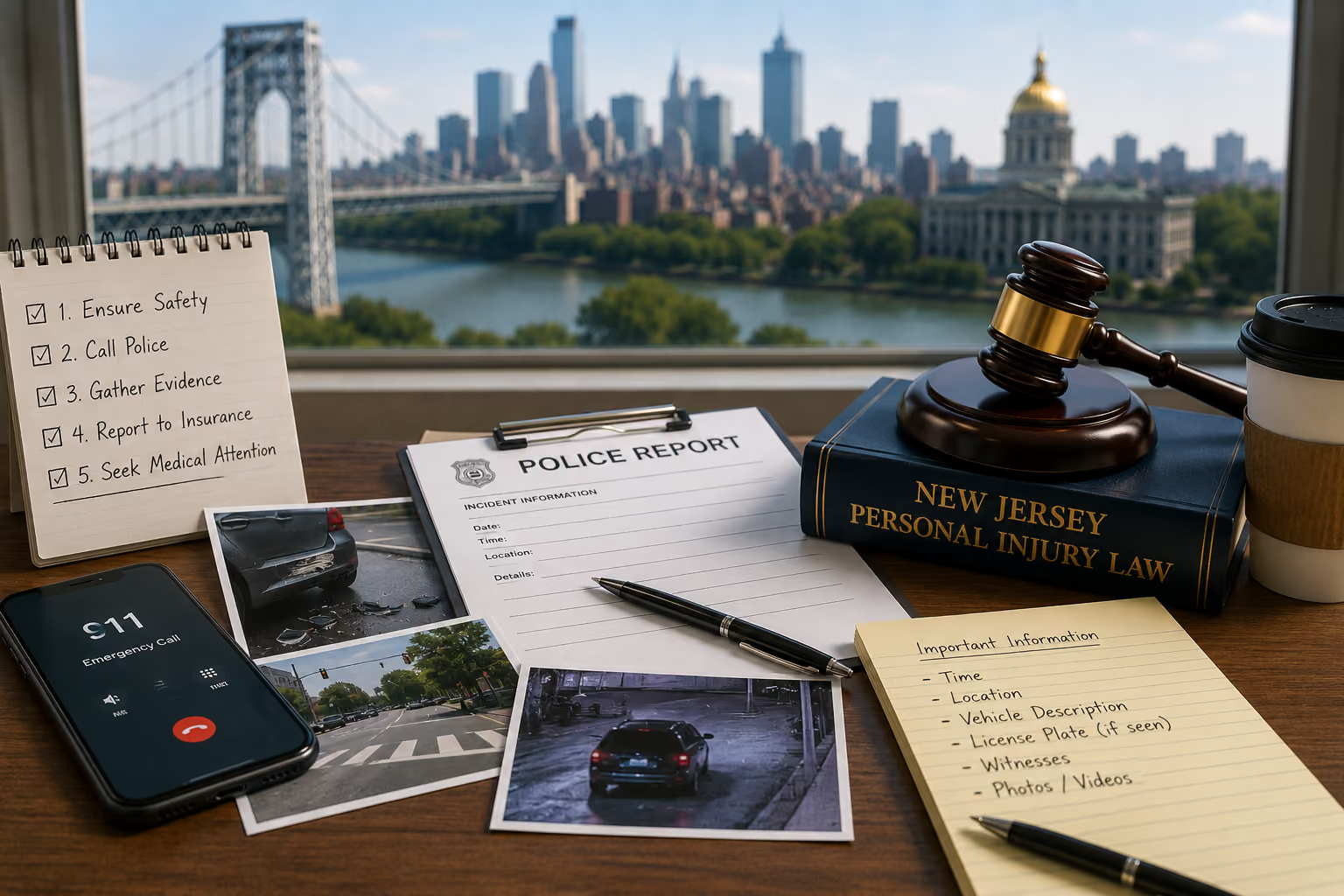
Fault is decided from evidence, so the best thing you can do is preserve that evidence and avoid handing the other side ammunition. A few steps in the first hours and days make the biggest difference.
- Get medical attention. Your health comes first, and a same-day record connects your injuries to the crash.
- Call the police and get the report. It is the single most important fault document, and it is the first thing an insurer reads.
- Do not admit fault. Do not apologize or speculate to the other driver, the police or any insurer. Stick to the facts; fault is determined later.
- Photograph everything. The scene, the impact point, all vehicle damage and your injuries, before anything is moved.
- Collect witnesses and note cameras. Get names and numbers, and flag any nearby businesses with cameras for your attorney.
- Call an attorney quickly. Preservation letters have to go out before footage is overwritten, often within days.
Keep the deadlines in mind too. Most New Jersey injury claims carry a two-year statute of limitations, and if a government road or vehicle contributed to the crash, a Notice of Tort Claim must be filed within 90 days.
Final Word
In a no-fault state it is easy to assume fault does not matter, but it decides whether you can step outside PIP and how much you actually recover once comparative negligence is applied. And fault is not decided by who sounds most convincing on the phone, it is decided by evidence, most of which is gathered or lost in the first days after a crash.
If fault is being disputed or an insurer is trying to pin blame on you, let me look at the evidence. The consultation is free, there is no obligation, and there is no fee unless we recover money for you.
Related Articles and Resources



Hurt in New Jersey? Let's Talk.
James Vasquez gives injured people across New Jersey a free, no obligation case review. Tell us what happened and we'll walk you through your options and what your claim may be worth.
.png)
Reach us whatever way works for you.
Need to talk to someone right now?

Areas we serve



.jpg)