What to Do After a Hit and Run in New Jersey
A hit and run feels like you have been left holding a bill for something that was not your fault, but you are not actually out of options, even if the driver is never found. New Jersey's system leans on your own coverage when the other driver flees, with PIP paying your early medical costs, uninsured motorist coverage standing in for the driver who took off, and collision covering your car. James Vasquez walks through exactly what to do in the first hours, how to chase down leads that might identify the driver, who ends up paying, what the 2026 minimum coverage changes mean for you, and why leaving the scene is a crime that runs on its own track from your injury claim.
A hit and run is one of the most maddening things that can happen on the road. Someone hits you with a two-ton machine, hurts you or wrecks your car, and then drives off and leaves you to deal with it alone. The law requires every driver in a collision to stop, help anyone who is hurt, and exchange information. A driver who flees is breaking that law, usually to dodge the consequences, and you are left holding a bill you did not cause.
The good news is that you are not actually out of options, even if the driver is never found. I am a former New Jersey prosecutor who now handles injury cases in Passaic County, and here is exactly what to do after a hit and run in New Jersey and how you still get paid.
What Should You Do Immediately After a Hit and Run in New Jersey?
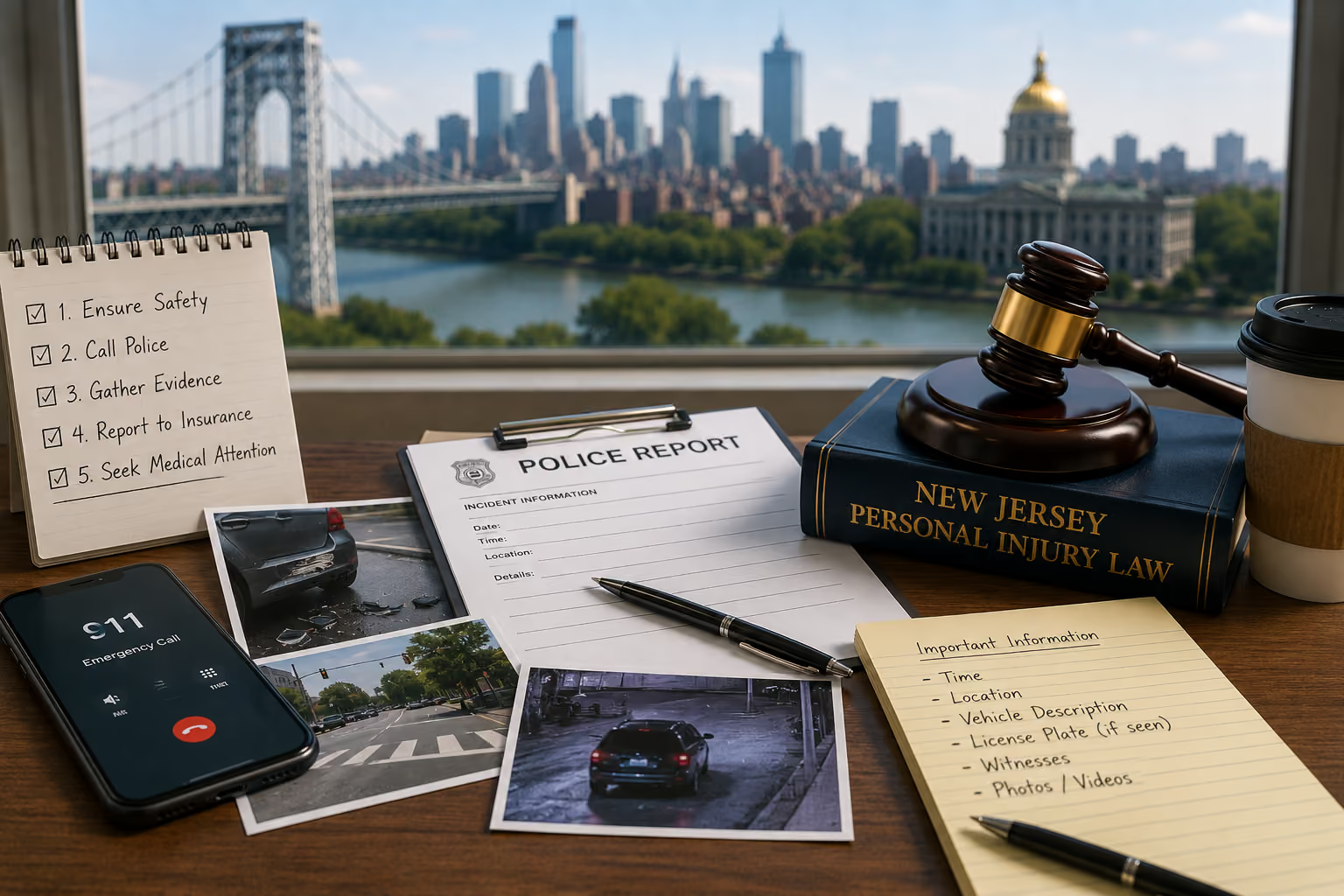
Get to safety and get medical care first, then report the hit and run to police while it is fresh, document everything, and notify your own insurer promptly. The same steps as any crash, with extra urgency on identifying the vehicle and preserving evidence.
In order:
- Get safe and get checked by a doctor. Call an ambulance if you are seriously hurt. Otherwise see a physician as soon as possible. Many victims do not feel their injuries for days because of shock, and a same-day record protects both your health and your claim.
- Call the police and report it. A hit and run should be reported right away, while the details are clear. The police report is central to your claim, and your own uninsured motorist coverage often requires a prompt police report.
- Write down everything about the other vehicle. Plate or partial plate, make, model, color, direction it fled, and any damage. Even fragments help.
- Document the scene and find witnesses. Photograph the damage and the location, get names and numbers from anyone who saw it, and note nearby businesses or homes with cameras.
- Notify your own insurer promptly. Report that a hit and run occurred. Keep it brief and factual.
- Call an attorney. The footage that could identify the driver is often gone within days, so preservation letters need to go out fast.
Keep New Jersey's two-year statute of limitations in mind as well, and remember that uninsured motorist claims can carry their own short reporting deadlines.
How Do You Try to Identify the Driver?
Anything you can capture helps, because identifying the driver opens up more sources of recovery. A partial plate, a vehicle description, witnesses and nearby camera footage are the strongest leads.
It is worth the effort, because the outcome changes depending on whether the driver is found. If the police or your attorney can identify the driver, you can pursue that driver's own insurance, and your uninsured motorist property damage coverage can apply to your vehicle. The leads that tend to work are a plate or partial plate, the make, model and color of the car, independent witness accounts, and footage from traffic, business or doorbell cameras near the scene. That footage is powerful but perishable, which is why moving quickly is so important.
Who Pays for a Hit and Run in New Jersey?
Your own insurance does the heavy lifting. Your PIP coverage pays your medical bills and a portion of lost wages regardless of fault, and your uninsured motorist coverage stands in for the fleeing driver's negligence, including pain and suffering.
Because the at-fault driver is out of the picture, your own policy is what protects you, and it comes from a few coverages working together:
- PIP (Personal Injury Protection) pays your initial medical costs and lost wages no matter who caused the crash.
- Uninsured motorist (UM) bodily injury covers your injuries, because an unidentified hit-and-run driver is treated as uninsured. This is where pain and suffering can be recovered, subject to your lawsuit option.
- Collision coverage pays to repair your vehicle when the driver is never identified.
- UM property damage can cover vehicle damage, but generally only if the other driver is identified.
One important catch on pain and suffering: if you carry a limitation on lawsuit policy, you can recover it through UM only if your injury meets the verbal threshold. The policy types and coverages are laid out in the New Jersey Department of Banking and Insurance Consumer's Guide to Auto Insurance.
What Are the Minimum Coverage Amounts in New Jersey (2026 Update)?
On a standard policy, uninsured and underinsured motorist limits track your liability limits, and as of January 1, 2026 the minimum is $35,000 per person and $70,000 per accident. A basic policy excludes uninsured motorist bodily injury coverage entirely.
This is a meaningful change from years past, when the standard minimum was much lower. New Jersey raised its minimum liability limits in phases, and because UM and UIM limits match liability, the floor for hit-and-run protection rose with them:
The catch is the policy type. A standard policy includes UM/UIM up to your liability limits, but a basic policy excludes UM bodily injury coverage altogether, which can leave a hit-and-run victim with no injury coverage at all. That is why I always tell people to carry well above the minimum and to check their declarations page. These minimums come from New Jersey Department of Banking and Insurance Bulletin 25-06.
Is Leaving the Scene a Crime in New Jersey?
Yes. New Jersey law requires every driver in a collision to stop, render aid for any injuries, and exchange contact and insurance information. Fleeing the scene is a violation that carries fines, license points, possible suspension and, where there are injuries, possible jail time.
That criminal exposure is separate from your civil claim. The police and prosecutor handle whether the fleeing driver is charged under New Jersey's leaving-the-scene law, while your personal injury claim for medical bills, lost wages and pain and suffering proceeds on its own track through your insurance. If the driver is later identified and charged, that can also strengthen the civil side, but you do not have to wait on the criminal case to pursue compensation.
Conclusion
A hit and run feels like you have been left with nothing, but New Jersey's system is built so that your own coverage protects you when the other driver runs. PIP covers your early medical costs, uninsured motorist coverage stands in for the driver who fled, and collision covers your car. The keys are acting fast, reporting promptly, preserving any evidence that could identify the driver, and knowing what your policy actually includes.
If you were hit by a driver who took off, do not assume you are on your own. Let me review your coverage and handle the claim. The consultation is free, there is no obligation, and there is no fee unless we recover money for you.
Related Articles and Resources



Hurt in New Jersey? Let's Talk.
James Vasquez gives injured people across New Jersey a free, no obligation case review. Tell us what happened and we'll walk you through your options and what your claim may be worth.
.png)
Reach us whatever way works for you.
Need to talk to someone right now?

Areas we serve



.jpg)