Route 46 Car Accidents in Clifton, NJ: What to Do After a Crash
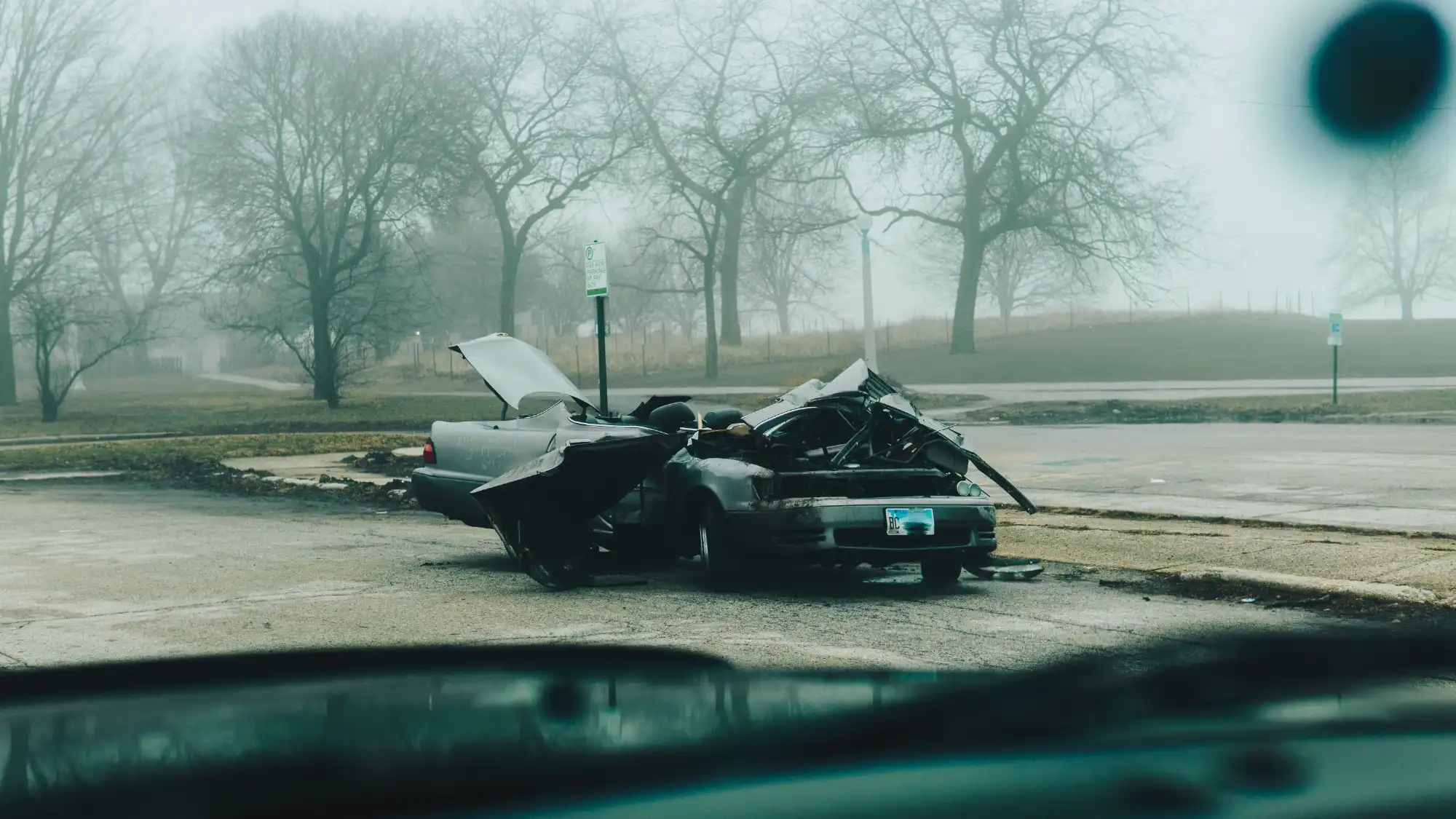
Get safe, call 911, exchange information, document the scene, and get medical care promptly. NJ law requires reporting any crash with injury or over $500 in damage (N.J.S.A. 39:4-130), and comparative negligence rules (N.J.S.A. 2A:15-5.1) let you recover as long as you're 50% or less at fault.
If you were just in a crash on Route 46 in Clifton, the single most useful thing you can do right now is slow down and follow a short, deliberate sequence: get safe, get medical help if anyone needs it, get the crash reported, and get everything documented before memories fade and vehicles get towed away.
Route 46 is one of the busiest and, by the state's own transportation studies, one of the more accident prone corridors in this part of New Jersey, which means the crashes that happen here often involve multiple vehicles, high speeds, and drivers who are eager to leave the scene as quickly as possible.
I have represented people hurt in crashes up and down this stretch of highway, from fender benders near local shopping plazas to serious collisions close to the Garden State Parkway interchange, and the steps below reflect what actually protects a claim once the adrenaline wears off.
What Should You Do Right After a Crash on Route 46?
Get yourself and any passengers out of harm's way first, then call 911. Route 46 through Clifton carries heavy commuter and commercial traffic at highway speeds, and a disabled vehicle sitting in a live lane is a serious hazard for a second collision. If your car is drivable and it is safe to do so, move to the shoulder or the nearest side street rather than standing in traffic to exchange information.
Why Does Route 46 in Clifton See So Many Accidents?
Route 46 combines heavy traffic volume with road design problems that state transportation officials have documented directly. The New Jersey Department of Transportation identified the Route 46 corridor near its interchange with Route 3, Valley Road and Notch and Rifle Camp Road as having inadequate acceleration and deceleration lanes, narrow shoulder widths, closely spaced driveways and access points, along with poor sight distance, conditions that the agency itself says have contributed to a high occurrence of crashes and chronic bottlenecks along this stretch.
Add in the mix of local shopping center traffic, frequent lane changes near the Garden State Parkway entrances and exits, and drivers merging on and off at Crooks Avenue and Paulison Avenue, and it is not surprising that this corridor produces a steady stream of rear end collisions and sideswipes, and, at night, a disproportionate share of wrong way and impaired driving crashes.
Attorney insight: When a crash happens at one of these documented trouble spots, the road design itself can become part of the case, not just the other driver's behavior. I always ask where exactly a crash occurred on Route 46, because a collision near a known merge point or a poorly lit ramp can point to more than one responsible party.
Is It Required by Law to Report the Crash to Police?
Yes, if the crash caused any injury, death, or more than 500 dollars in property damage. Under N.J.S.A. 39:4-130, a driver involved in such a crash must give notice to local police, county police, or the State Police by the quickest means of communication, and must also submit a written report to the Motor Vehicle Commission within 10 days if an officer does not already file one. Separately, N.J.S.A. 39:4-129 requires you to stop, exchange information, and render reasonable assistance to anyone injured. Failing to report a qualifying crash can lead to fines and even suspension of your license or registration, on top of leaving you without an official record if the insurance company later disputes what happened.
What Information Should You Collect at the Scene?
Beyond the basic exchange of names and insurance information, a few extra details make a real difference later. I tell clients to note the exact location on Route 46, including the nearest exit, cross street, or mile marker, along with the time, direction of travel, and weather and lighting conditions. Photographs of the vehicles from multiple angles, the surrounding roadway, any skid marks, and the responding officer's badge number or report number are all worth the extra two minutes at the scene.
- Names, phone numbers, and insurance information for every driver involved
- License plate numbers and vehicle descriptions
- Names and contact information for any witnesses
- Photos of vehicle damage, the roadway, and traffic signals or signs
- The responding officer's name and the police report number
- The exact location, including nearest exit or cross street on Route 46
Do You Need to See a Doctor Even If You Feel Fine?
Yes, and this is one of the most common mistakes I see people make. Adrenaline can mask pain from soft tissue injuries, whiplash, and even concussions for hours or days after a crash. Beyond your health, a documented medical evaluation close in time to the crash creates the medical record that connects your injuries to the accident, which insurance adjusters look for closely when they decide how much your claim is worth.
How Does New Jersey's Fault Law Affect Your Claim?
You can still recover damages even if you share some of the blame, but your compensation is reduced by your percentage of fault, and you are barred from recovering entirely if you are found more than half responsible. New Jersey follows a modified comparative negligence rule under N.J.S.A. 2A:15-5.1: if your damages total 100,000 dollars and you are found 20 percent at fault, your recovery drops to 80,000 dollars. Insurance companies routinely try to shift some percentage of fault onto the injured driver, which is part of why the documentation you collect at the scene matters so much.
What if the Crash Happened at a Known Trouble Spot?
Some crashes on Route 46 are not just about driver error. If the collision happened near a documented problem area, such as a poorly designed merge, an interchange with limited sight distance, or a roadway defect, the design or maintenance of the road itself may be relevant to who is responsible. These cases can involve a state or municipal entity, which comes with a much shorter deadline than a typical claim against another driver.
Under the New Jersey Tort Claims Act, a claim against a public entity generally requires a written notice of claim within 90 days of the accident, far sooner than the two year deadline that applies to most personal injury lawsuits. If you suspect the road itself played a role in your crash, do not wait to have that possibility evaluated.
How Long Do You Have to File a Claim?
In most cases you have two years from the date of the crash to file a personal injury lawsuit under N.J.S.A. 2A:14-2. As noted above, if a government vehicle, government employee, or a defect in a state or municipal roadway may have contributed to the crash, the notice of claim deadline is only 90 days. Missing either deadline can bar your claim entirely, regardless of how strong the underlying facts are.
Should You Talk to the Other Driver's Insurance Company?
I generally advise against giving a recorded statement to the other driver's insurance company before speaking with an attorney. Adjusters are trained to ask questions that sound casual but are designed to get you to downplay your injuries or accept a share of the blame. Anything you say in that conversation can be used later to reduce what you are offered, so it is safer to let your own attorney handle those communications on your behalf.
How Can a Clifton Car Accident Lawyer Help?
I built my practice around personally handling the parts of a Route 46 crash claim that insurance adjusters count on victims not knowing how to do. That includes pulling the police report and any available traffic camera or NJDOT incident data, identifying every insurance policy that may apply, documenting how road conditions at the crash site may have contributed, and negotiating directly with insurers on a no win no fee basis so you are never paying out of pocket to find out what your case is worth.
The Bottom Line
A crash on Route 46 in Clifton can happen in seconds, but what you do in the minutes and days afterward has a real effect on your health and on your claim. Get safe, get medical attention, get the crash reported, and get everything documented while it is still fresh. Once that is done, having your case reviewed by someone who knows this stretch of road, and New Jersey's rules on fault and deadlines, is the best way to find out where you actually stand.
If you or someone you love was hurt in a crash on Route 46 or anywhere in Passaic, Bergen, Essex, or Morris County, I would be glad to review what happened and give you a straight answer on your options.



Answers, before you even call.
Have a question we didn't cover? Contact us anytime. Every consultation is free, confidential, and no-strings.

Hurt in New Jersey? Let's Talk.
James Vasquez gives injured people across New Jersey a free, no obligation case review. Tell us what happened and we'll walk you through your options and what your claim may be worth.
.png)
Reach us whatever way works for you.
Need to talk to someone right now?

Areas we serve


.jpg)