Amazon Delivery Driver Accident Lawyer in NJ: Who Is Liable?
Breaks down Amazon's DSP and Flex driver structure, the $1M insurance minimums involved, and the legal theories (negligent hiring, agency, direct negligence) that can still reach Amazon despite its independent-contractor model.
If you were hit by an Amazon delivery van, figuring out who actually pays for your injuries is more complicated than it looks. Amazon has built its delivery network around independent contractors and third party Delivery Service Partners specifically to distance itself from direct liability, and that structure genuinely does make these cases harder to pursue than a typical car accident claim.
It does not make them impossible. Courts around the country have allowed claims against Amazon itself when the facts support it, and understanding how the delivery network is structured is the first step toward figuring out where your case actually stands.
What Is a Delivery Service Partner?
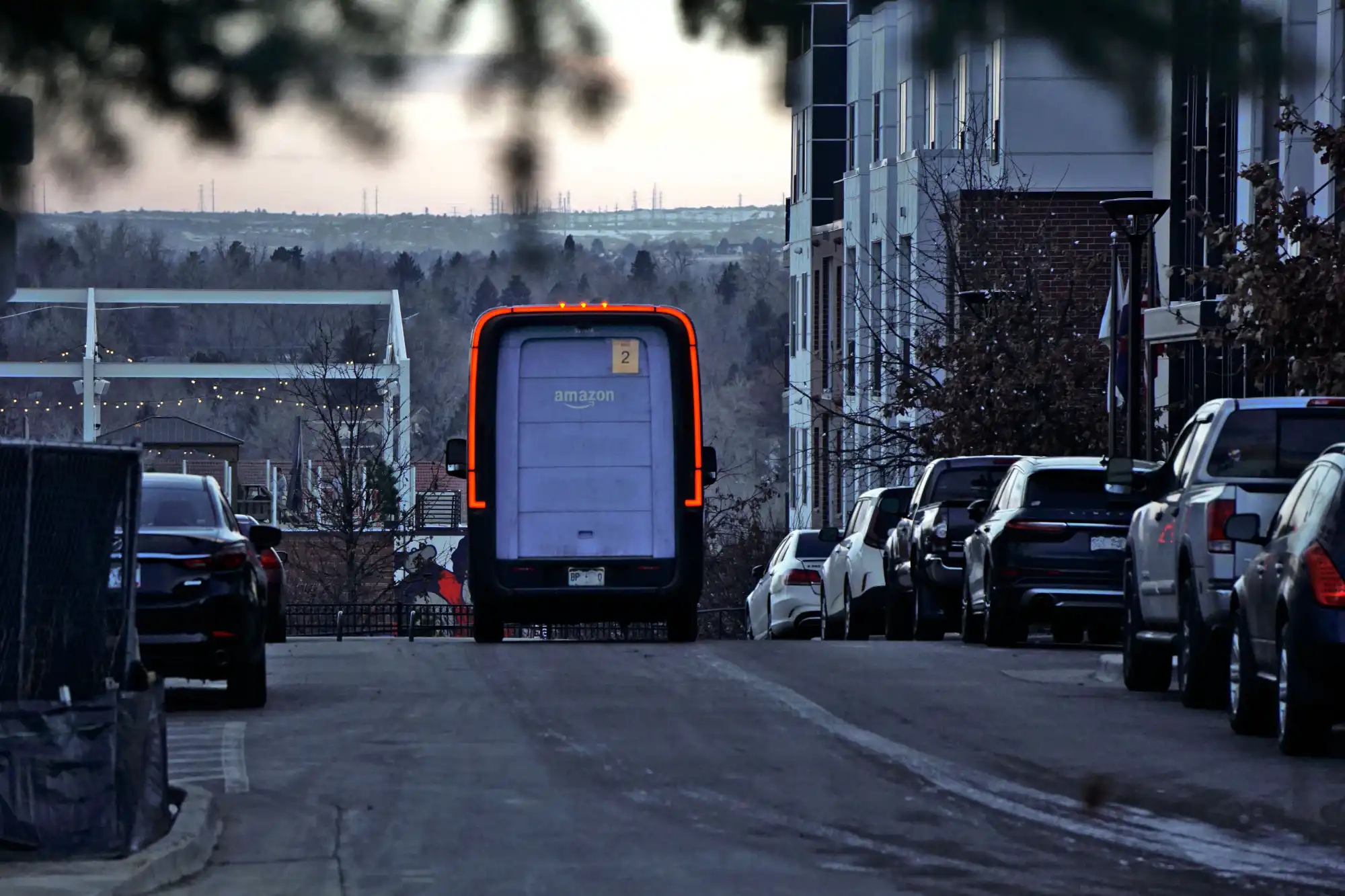
Amazon fulfills the large majority of its own branded deliveries through a network of independently owned Delivery Service Partners, commonly called DSPs. Each DSP is technically a separate small business that hires its own drivers, operates its own fleet of Amazon branded vans and is required to carry its own commercial liability insurance. Amazon's contracts with DSPs are structured specifically to establish the DSP, not Amazon, as the driver's legal employer, which is the first hurdle in any claim against Amazon directly.
How Are Amazon Flex Drivers Different?
Amazon Flex drivers are a separate category of independent contractor who use their own personal vehicles rather than Amazon branded vans. Amazon's commercial insurance for Flex drivers generally applies only while the driver is actively logged into the Flex app and in the middle of a delivery. If the app was off, or no active delivery was underway at the time of the crash, the driver's personal auto policy may be the primary source of coverage instead, which can create real disputes between insurers about which policy actually applies.
Can You Sue Amazon Directly?
Despite Amazon's independent contractor structure, several legal theories can support a direct claim against Amazon itself. Courts have looked past the contractual labels to examine how much actual control Amazon exercises over DSP operations, including setting delivery routes, imposing package quotas, requiring safety training and monitoring driver behavior through in-vehicle devices. That level of control can support claims based on an agency relationship, negligent hiring or supervision if Amazon knew or should have known a DSP employed unsafe drivers, along with direct negligence if Amazon's own delivery quotas or scheduling pressure contributed to unsafe driving.
Attorney insight: Amazon's contracts with DSPs often include clauses requiring the DSP to defend Amazon in any lawsuit, even when Amazon's own policies may have contributed to the crash. Untangling that relationship early, through formal discovery if necessary, is often what determines whether Amazon can be held directly accountable.
How Much Insurance Is Actually Available?
DSPs are generally required to carry at least 1,000,000 dollars in commercial liability coverage, well above a standard personal auto policy but still potentially insufficient for a catastrophic injury. Amazon Flex drivers making an active delivery are typically covered under Amazon's own commercial policy, also often up to 1,000,000 dollars. Identifying every available policy, including any coverage Amazon itself may provide, is a central part of maximizing recovery in a serious Amazon delivery accident case.
Can You Pursue Both the DSP and Amazon?
In many cases, yes. You can generally pursue the DSP for the driver's own negligence, along with any negligent hiring or supervision on the DSP's part, while separately pursuing Amazon if its own policies, scheduling pressure or delivery quotas contributed to unsafe driving. The DSP's commercial policy typically serves as the primary source of recovery, with a claim against Amazon itself available as an additional avenue when the facts support it and the DSP's coverage is not enough to cover the full extent of the injury.
How Does Shared Fault Affect Your Claim?
You can still recover damages even if you share some of the blame, but your compensation is reduced by your percentage of fault, and you are barred from recovering entirely if you are found more than half responsible. New Jersey follows a modified comparative negligence rule under N.J.S.A. 2A:15-5.1: if your damages total 100,000 dollars and you are found 20 percent at fault, your recovery drops to 80,000 dollars.
How Long Do You Have to File a Claim?
In most cases you have two years from the date of the crash to file a lawsuit under N.J.S.A. 2A:14-2, whether you are pursuing the driver, the DSP or Amazon itself. Given how quickly a DSP or Amazon can compile its own account of a crash, and how central discovery of internal control and training records often is to these cases, having the claim investigated well before that deadline protects your ability to build the strongest possible case.
How Can a Lawyer Help After an Amazon Delivery Crash?
I start by identifying whether the driver who caused your crash was operating as a DSP employee or an Amazon Flex driver, since that distinction determines which insurance policy applies first. From there I investigate the level of control Amazon exercised over the delivery in question, pursue formal discovery of driver qualification and training records when warranted and pursue every available insurance policy, all on a no win no fee basis.
The Bottom Line
Amazon's delivery network is deliberately structured to make direct claims against the company more difficult, but that structure is not an automatic shield. Identifying whether a driver was a DSP employee or an Amazon Flex driver, and how much control Amazon exercised over the delivery, often determines how much of your claim you can ultimately recover.
If you were hurt in a crash involving an Amazon delivery vehicle anywhere in Passaic, Bergen, Essex or Morris County, I would be glad to review what happened and give you a straight answer on your options.

Answers, before you even call.
Have a question we didn't cover? Contact us anytime. Every consultation is free, confidential, and no-strings.

Hurt in New Jersey? Let's Talk.
James Vasquez gives injured people across New Jersey a free, no obligation case review. Tell us what happened and we'll walk you through your options and what your claim may be worth.
.png)
Reach us whatever way works for you.
Need to talk to someone right now?

Areas we serve



.jpg)