What to Do if Your Car Insurance Claim Is Denied in New Jersey

You pay your premiums for years, get hurt in a crash, and then the denial letter shows up, which happens far more often than people expect, and not only to new policyholders. A denial is the company's position at that stage, not the end of the road, and many that look final get reversed once someone challenges them properly. James Vasquez explains the common reasons claims get denied in New Jersey, the practical steps to push back with evidence, how PIP and comparative negligence factor in, when suing becomes the right move, and when an insurer's handling of a valid claim can cross into bad faith.
You pay your premiums for years, you get hurt in a crash, and you expect your insurance company to come through. Then the denial letter arrives. It happens more than people think, and not only to new policyholders. Insurers will look for any reason to avoid paying, and valid claims get denied all the time.
If that has happened to you, you are not out of luck. A denial is the company's position at that stage, not the end of the road. I am a former New Jersey prosecutor who now handles injury cases in Passaic County, and here is why car insurance claims get denied in New Jersey and exactly what you can do about it.
Why Was My Car Insurance Claim Denied in New Jersey?
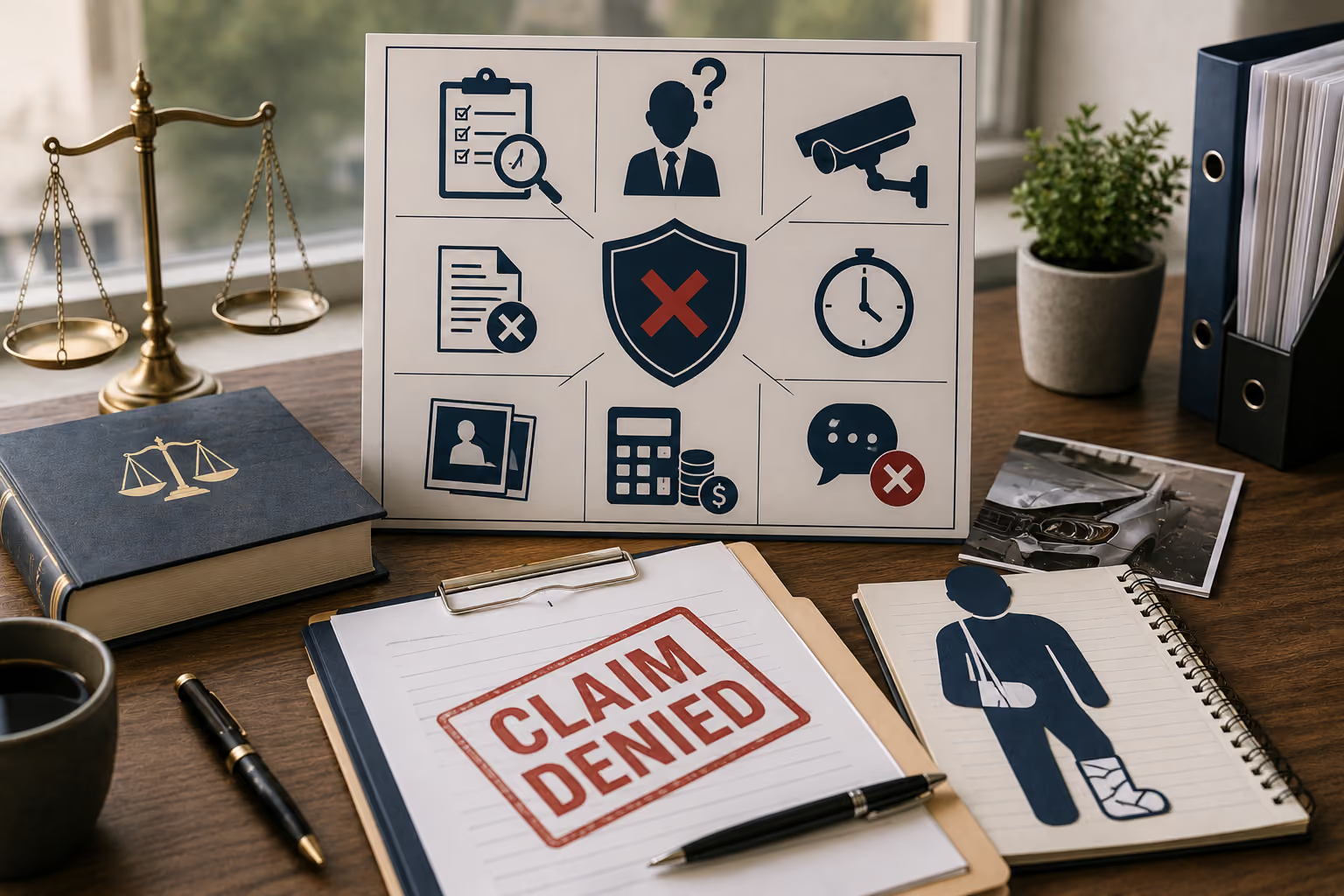
The most common reasons are a policy that does not cover that type of accident, coverage that lapsed or a missed filing deadline, and not being a named party on the policy. Some denials are valid, but insurers also deny valid claims, so the letter is a starting position, not a final ruling.
It is worth knowing which kind of denial you are dealing with. A first-party denial is your own insurer refusing a claim under your policy, such as PIP or uninsured motorist coverage. A third-party denial is the other driver's insurer refusing to pay. The two are handled differently, and the options below depend on which one you are facing.
What Can You Do if Your Car Insurance Claim Is Denied?
A denial is not the end. You can get the reason in writing, appeal with more evidence, file against the at-fault driver's insurer, complain to the state regulator, and consult an attorney who can negotiate or file suit.
In practical order, here is what to do:
- Get the denial in writing. Make the insurer state the specific reason. You cannot challenge a reason you have not been given clearly.
- Compare the reason to your policy. Coverage denials are often based on misapplied exclusions or wrong readings of the policy language.
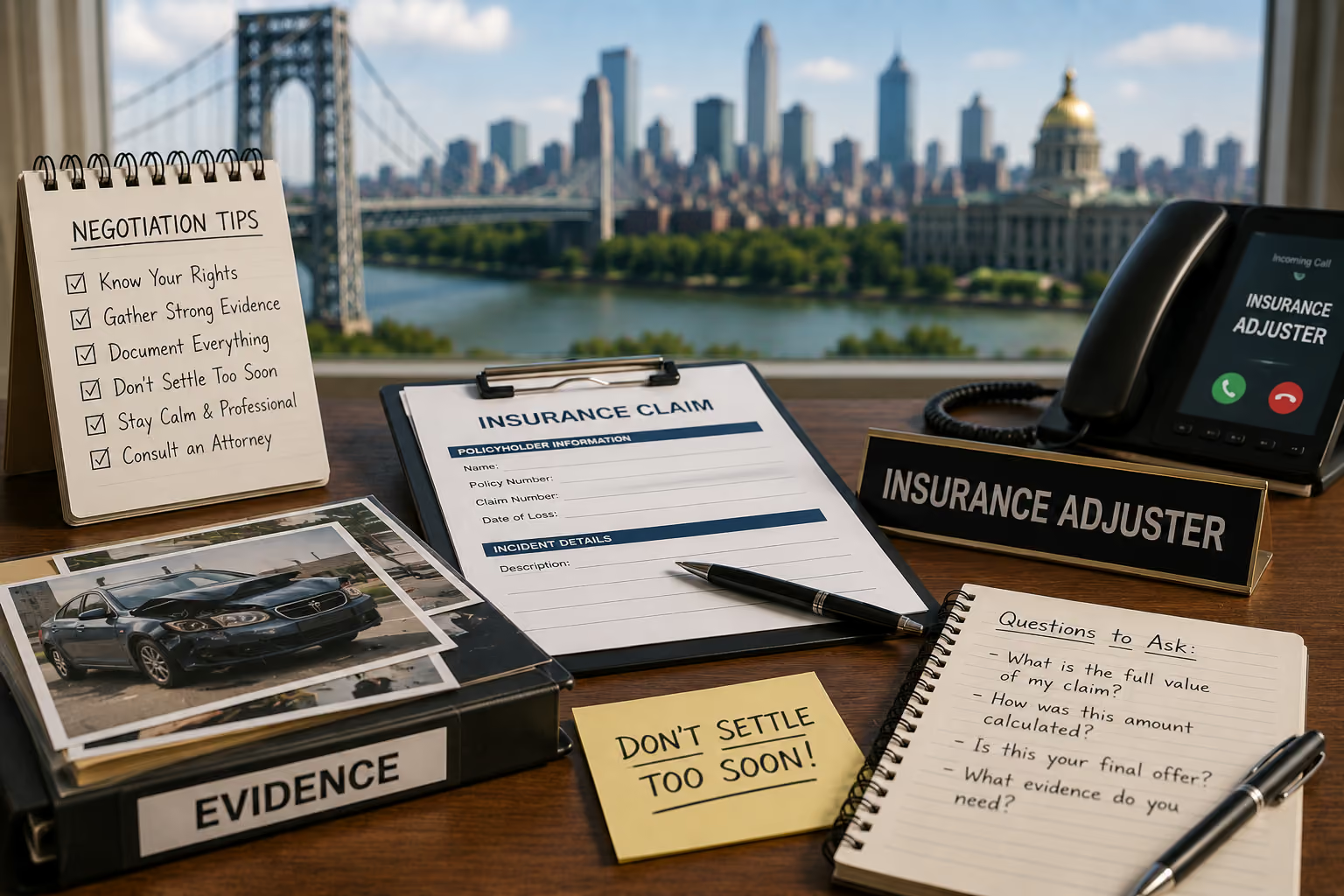
- Appeal with additional evidence. A denial can frequently be reopened once stronger documentation, like the police report, medical records and photos, is submitted.
- File with the other driver's insurer. If you were not at fault, you can pursue the at-fault driver's company, since every New Jersey driver is required to carry coverage.
- File a complaint with the New Jersey Department of Banking and Insurance. The state regulator takes consumer complaints about claim handling.
- Consult an attorney, and sue if needed. If the insurer will not pay a legitimate claim, a lawsuit may be the next step.
How Do New Jersey No-Fault and PIP Affect a Denied Claim?
New Jersey is a no-fault state, so your own Personal Injury Protection coverage pays your initial medical bills and a portion of lost wages regardless of who caused the crash. If you were not at fault and your claim is still denied, you can also file against the other driver's insurer.
That is an important backstop: even when fault is being argued, your PIP coverage is designed to cover early medical costs and lost wages, which is one reason reporting promptly to your own insurer matters. The policy options and how PIP works are laid out in the New Jersey Department of Banking and Insurance Consumer's Guide to Auto Insurance. In a multi-car crash where you were not to blame, the other drivers' policies are additional sources of recovery if your own claim stalls.
What Is Comparative Negligence, and How Does It Affect Your Claim?
More than one driver can share fault for a crash. Under New Jersey's comparative negligence rule, you can recover as long as your share of fault is not greater than the other driver's, with your recovery reduced by your percentage.
To prove the other driver was at fault, police reports and evidence are what count, which is exactly why photographs taken at the scene matter so much if you are able to take them. One important limit: this comparative negligence rule applies when you are claiming against another driver. It does not apply to a first-party claim against your own policy.
Can You Sue After a Denial?
Yes. You can sue the other party, and sometimes the insurer, in the court that matches the amount at stake. What you can sue for depends on whether you carry a traditional or a no-fault policy.
New Jersey offers two policy types. Under a no-fault, limitation on lawsuit policy, you can sue for pain and suffering only if the accident caused dismemberment, significant disfigurement or scarring, a displaced fracture, loss of a fetus, or a permanent injury. Under a traditional, no limitation on lawsuit policy, you can sue for the full range of damages. Either way, you can recover economic losses like medical bills and lost wages.
Where you file depends on the amount:
Those limits are current as of New Jersey's 2022 increase, the official figures are on the New Jersey Courts Small Claims self-help page. Keep the two-year statute of limitations in mind: a denial does not pause it, so if the deadline is near, filing suit may be necessary to protect your rights.
Can You Sue Your Own Insurer for Bad Faith?
Possibly. If your own insurer denied or delayed a valid claim in bad faith, you may be able to sue beyond the original claim. New Jersey's Insurance Fair Conduct Act can give certain first-party claimants additional remedies.
Not every denial is bad faith, insurers are allowed to investigate and dispute claims. But when a company denies a clear claim without a reasonable basis, drags it out, or ignores the evidence, that conduct can support a separate claim. Under the Insurance Fair Conduct Act, a first-party claimant, for example on an uninsured or underinsured motorist claim, may be able to recover attorney fees and damages beyond the policy amount. Because bad faith is fact-specific, it is worth having an attorney review how the insurer actually handled your claim.
The Bottom Line
A denied car insurance claim is not the final word. Get the reason in writing, check it against your policy, and push back with evidence. Depending on your situation, you may be able to appeal, file against the other driver, complain to the state, sue in the right court, or pursue a bad faith claim against your own insurer. Many denials that look final are reversed once someone challenges them properly.
If your claim was denied, do not assume the insurer is right. Let me review the denial and your policy. The consultation is free, there is no obligation, and there is no fee unless we recover money for you.
Related Articles and Resources

%20in%20New%20Jersey%3F.jpg)

Hurt in New Jersey? Let's Talk.
James Vasquez gives injured people across New Jersey a free, no obligation case review. Tell us what happened and we'll walk you through your options and what your claim may be worth.
.png)
Reach us whatever way works for you.
Need to talk to someone right now?

Areas we serve



.jpg)