What Is Bodily Injury Liability Insurance? A Guide

Bodily injury liability is the part of an at-fault driver's car insurance that pays for another person's medical bills, lost wages, and pain and suffering after a crash. It does not cover the at-fault driver's own injuries. Coverage typically has two limits, a per-person cap and a per-accident cap, and if a claim exceeds those limits, your own underinsured motorist coverage can often help cover the difference.
Bodily injury liability is the part of a driver's car insurance that pays for someone else's injuries when that driver causes a crash. If another driver hurt you, this is usually the coverage your claim will draw from first.
I've spent years helping injured clients figure out exactly what an at-fault driver's policy will and won't pay for. This guide breaks down what bodily injury liability covers, how the limits work, and what to do if a claim ends up worth more than the policy can pay.
What is bodily injury liability insurance?
Bodily injury liability is the portion of an auto policy that pays for another person's medical bills, lost wages, and pain and suffering when the policyholder is at fault for a crash. It is one half of the standard liability coverage on a car insurance policy, alongside property damage liability, which pays for vehicle and property repairs instead of injuries.
When you file a claim after a crash that wasn't your fault, you are generally making a claim against the at-fault driver's bodily injury liability coverage, not your own policy.
How much bodily injury liability coverage is required?
Every state sets its own minimum liability requirements, and those amounts vary quite a bit depending on where you live. Most states require some level of bodily injury liability to legally register and drive a vehicle.
The trouble is that a state's legal minimum and an amount that actually covers a serious injury are often two very different numbers. A single emergency room visit, a few weeks of physical therapy, or any time away from work can quickly add up to more than a low-limit policy provides. That gap is why many drivers choose coverage well above their state's minimum, and why an umbrella policy is worth considering if you have meaningful assets to protect.
Does bodily injury liability cover my own injuries?
No. Bodily injury liability only pays for the injuries the at-fault driver caused to other people. It never pays the at-fault driver's own medical bills.
If you were the one injured, your own medical treatment is generally paid first through your own health insurance, your personal injury protection coverage, or your medical payments coverage, depending on your state and policy. Once that coverage is used up, or once your injury meets your state's threshold for a liability claim, you can then pursue the at-fault driver's bodily injury liability coverage for the remaining losses, including pain and suffering, which those other coverages typically don't pay for.
What is the difference between a per-person and per-accident limit?
Bodily injury liability limits are usually written as two numbers, for example 100/300. The first number, in thousands, is the per-person limit, the most the policy will pay toward any single injured person's claim. The second number is the per-accident limit, the total amount available for everyone hurt in that crash combined.
If three people are injured in the same accident, the per-accident limit caps the total payout regardless of how the costs are divided among them. This is why a serious multi-vehicle or multi-passenger crash can exhaust a policy's limits quickly, even a policy that looks generous on paper.
What if the at-fault driver's coverage is not enough?
When an injured person's medical bills and lost wages exceed the at-fault driver's bodily injury liability limits, there are usually two paths forward. The first is your own underinsured motorist coverage, which is designed to fill the gap between what the at-fault driver's insurer pays and what your claim is actually worth.
The second path is pursuing the at-fault driver personally for the remaining balance, though this is often impractical if the driver doesn't have meaningful personal assets. This is one of the reasons I always recommend clients review their own underinsured motorist coverage, since it protects them regardless of what the other driver happened to be carrying.
What does bodily injury liability pay for besides medical bills?
Beyond hospital and treatment costs, bodily injury liability can also cover lost wages while the injured person recovers, compensation for pain and suffering, rehabilitation and ongoing care, and the at-fault driver's legal defense costs if the injured party files a lawsuit. In cases involving a fatality, it can also help cover funeral expenses.
How is bodily injury liability different from property damage liability?
Bodily injury liability and property damage liability are usually purchased together, but they cover different things. Bodily injury liability pays for injuries to people. Property damage liability pays for damage the at-fault driver caused to someone else's vehicle or property, such as a fence, mailbox, or storefront.
Both are required in most states, and both have their own separate limits on a typical policy.
Should I accept the insurance company's first settlement offer?
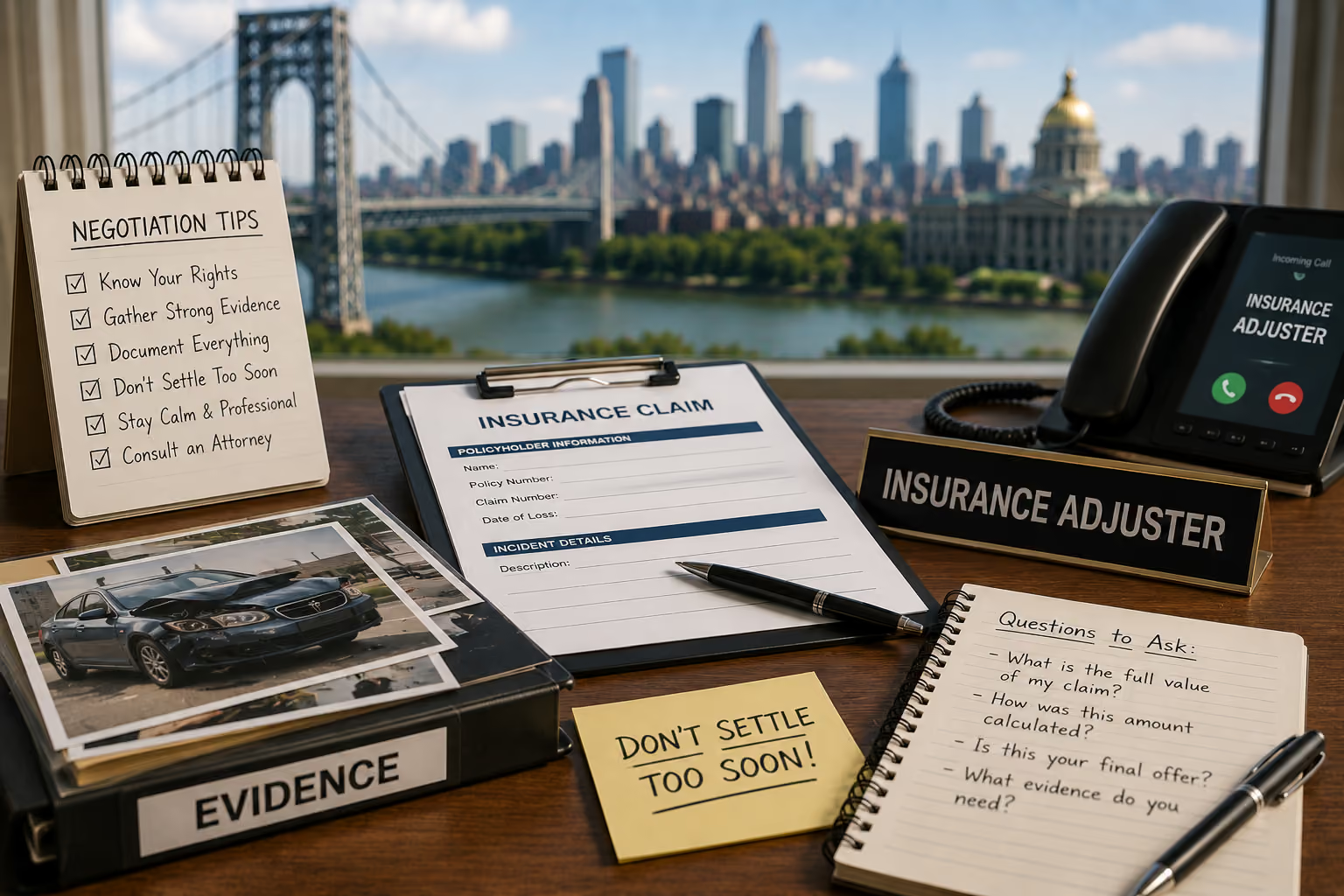
I would encourage you not to accept an early offer before you understand the full scope of your injuries and confirm what the at-fault driver's actual policy limits are. Insurance adjusters often make an initial offer before treatment is complete, and that number is rarely close to what a claim is truly worth once ongoing care, lost income, and pain and suffering are accounted for.
Before you sign anything or accept a check, it's worth having an attorney review the policy limits and your medical records to confirm the offer reflects the real value of your claim.
Not until you know the full extent of your injuries and the at-fault driver's actual policy limits. Early offers are often lower than what the claim is really worth.
Conclusion
Bodily injury liability insurance is the coverage that determines how much money is actually available after someone else causes a crash that injures you. Understanding how the per-person and per-accident limits work, what the coverage pays for, and what your options are when those limits fall short can make a real difference in how a claim plays out.
If you were injured in a car accident and have questions about an at-fault driver's bodily injury liability coverage, my office is here to help. Call 862-247-8711 for a free consultation.
Related Articles and Resources
%20in%20New%20Jersey%3F.jpg)


Answers, before you even call.
Have a question we didn't cover? Contact us anytime. Every consultation is free, confidential, and no-strings.

Hurt in New Jersey? Let's Talk.
James Vasquez gives injured people across New Jersey a free, no obligation case review. Tell us what happened and we'll walk you through your options and what your claim may be worth.
.png)
Reach us whatever way works for you.
Need to talk to someone right now?

Areas we serve



.jpg)