Plainfield Rideshare Accident Lawyer Union County, New Jersey
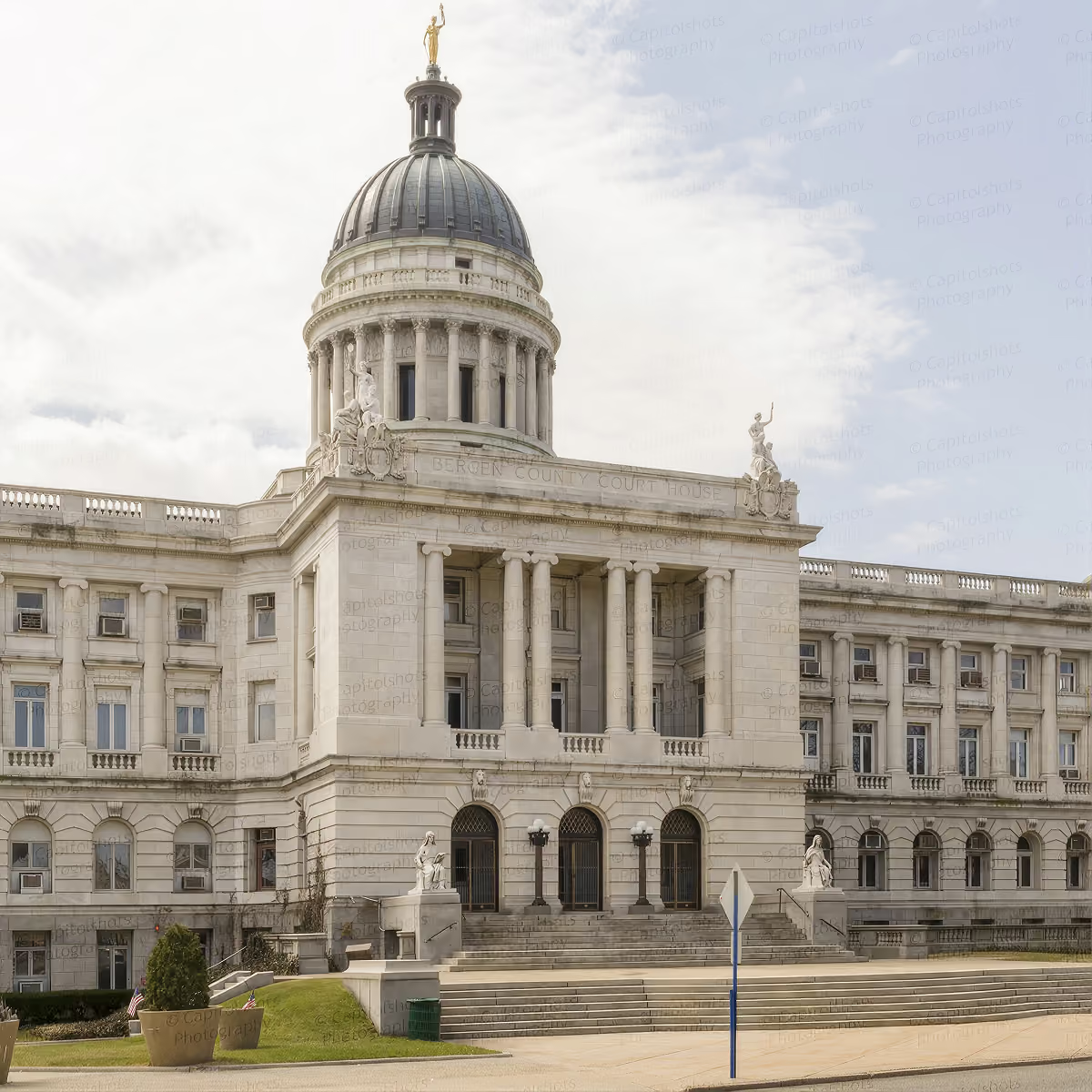
If you were hurt in Hackensack, James Vasquez fights to get you every dollar you are owed. He has represented Bergen County's injured since 2004, and he knows this county seat's I-80, Route 4 and Route 17 corridors, its historic Hackensack River bridges, and the streets around Main Street and Hackensack University Medical Center.
.avif)
The law about knowing whose car you are getting into
.avif)
.svg)
In 2019 New Jersey became the first state to require rideshare vehicles to carry specific identification. It is known as Sami's Law, after a young woman from this state who got into a car she believed was her Uber and was killed by the man driving it. A federal version followed in 2023.
The requirements are concrete. Companies must issue drivers identifying markers for the front windshield and rear window, placards for the rear side windows showing the driver's name, photograph and licence plate number, and machine readable codes a passenger can scan to confirm the vehicle. Drivers who fail to display them face a fine, and a company that does not comply can lose its permission to operate in the state. Selling rideshare signage to people who are not authorised drivers was also addressed, because that is how impersonation happens. For anyone injured, this creates a factual question worth asking early. Was the vehicle actually identifiable in the way the law requires? Where it was not, that is a documented failure rather than a general complaint about safety standards, and it may be relevant both to what happened and to who bears responsibility for it. There is a second issue that follows from the same subject and is rarely explained. Where a passenger is harmed by something a driver did deliberately rather than carelessly, the insurance that covers negligent driving may not respond at all. James Vasquez has handled New Jersey injury claims since 2004.
Rideshare claims we handle in Plainfield
Collisions are the bulk of this work. The rest concerns who the driver was and whether the vehicle was what it appeared to be.
Where Plainfield rideshare incidents happen
Pickups concentrate where people are least able to check carefully, which is precisely the problem the law addresses.
Nightlife and restaurant blocks
Groups leaving at closing time, ordering separately, and getting into whichever car appears, sometimes without checking anything at all.
What matters here: the trip record against the vehicle actually entered. A mismatch between the two is the single most important fact in these situations.

Front Street and the downtown kerb
Vehicles waiting in the travel lane while passengers cross to reach them, with doors opening into whatever is passing.
What matters here: where the vehicle stopped, since a driver waiting in a live lane and one properly pulled over are in different positions.
Hospital and care facility approaches
People travelling to and from appointments, sometimes unwell or with mobility difficulties, and less able to verify a vehicle before getting in.
What matters here: whether the passenger had entered the vehicle yet, since injuries during approach and assistance are treated differently from injuries in transit.

The rail station at night
People arriving after dark to a line of waiting vehicles, tired and keen to get home, with several cars looking much alike.
What matters here: whether the vehicle carried the required markers and placards. Station camera coverage frequently records both the car and the pickup.
Route 22 and the arterials
Longer trips where injuries in a collision are serious enough that the available coverage tier decides the outcome.
What matters here: the app status log, which determines whether the substantial coverage applies or the much smaller waiting tier does.
Residential streets
Narrow streets where a car waits with lights on and a passenger walks out to it, frequently without a clear view of any signage.
What matters here: whether identification was displayed and visible at that hour, which is what the illuminated requirement exists for.
In every case the first documents are the trip record from your own account and whatever the location's cameras captured, and both are time limited.
Six things a New Jersey rideshare vehicle must have
These are specific statutory requirements rather than company policy, which makes their absence a documented failure.
Identifying markers front and rear
Companies must issue two markers for display on the front windshield and rear window, so a waiting vehicle is identifiable as an authorised one.
Visible at night
The signage requirement contemplates illuminated or reflective display, because the risk it addresses arises overwhelmingly after dark.
Placards with the driver's details
Two placards for the rear side windows showing the driver's name, photograph and licence plate number, so a passenger can match them to the app.
A scannable code
Machine readable codes a passenger can scan to confirm the vehicle is the one they booked, rather than relying on a glance at a plate.
Penalties on both sides
A driver who fails to display the required identification faces a fine, and a company that does not comply risks its permission to operate in the state.
Signage cannot be sold openly
The legislation addressed the sale of rideshare signage, because unrestricted availability of branding is how impersonation becomes possible.
Before getting in, match the plate, the make and the driver's photograph to the app, and ask the driver who they are collecting rather than volunteering your name. If a vehicle carried none of the required identification and something happened, that is worth raising. For how these claims work statewide, see the rideshare accident practice area page.
Why an assault claim works differently from a crash claim
This is difficult subject matter and it deserves a straight explanation rather than avoidance, because the coverage position surprises people badly.
The claim against the individual is straightforward in principle
A person who assaults or harms a passenger is liable for it, and a criminal prosecution may run alongside a civil claim. The practical difficulty is that an individual driver frequently has no assets worth pursuing, which means the question quickly becomes whether anyone else is answerable.
Liability insurance may not respond to an intentional act
The substantial coverage New Jersey requires during a prearranged ride exists for negligent operation of a vehicle. Policies commonly exclude intentional acts, so the coverage that would answer for a collision may not answer for a deliberate assault. That is a genuine and frequently decisive obstacle, and anyone told otherwise should ask to see the basis for it.
Claims against the platform are contested
Arguments that a company was negligent in screening, retaining or monitoring a driver, or in failing to enforce identification requirements, are advanced and are vigorously defended, including on the basis that drivers are independent contractors. A federal review published in 2024 found background check practices varied considerably between companies. Whether such a claim succeeds is fact specific and unsettled, and it should be assessed honestly rather than promised.
Three rules about rideshare vehicles and drivers
One is specific to New Jersey. Two determine what coverage answers.
Rideshare vehicles must be identifiable
New Jersey enacted these requirements in 2019, the first state to do so, and a federal version followed in 2023. Companies must issue identifying markers, placards showing the driver's name, photograph and plate, and scannable codes for passenger verification. Drivers face fines for non compliance and companies risk their permission to operate.
Coverage for negligence may not cover a deliberate act
The substantial liability coverage required during a prearranged ride is directed at negligent operation. Policies commonly exclude intentional conduct, which means the insurance answering for a collision may not answer for an assault. Where that applies, the claim depends on other routes and should be assessed candidly.
Coverage is tiered to the app period
Modest coverage applies while a driver is logged in and available, rising substantially once a prearranged ride begins, together with uninsured and underinsured coverage at the higher level. The prearranged period generally starts when a request is accepted rather than at pickup.
The two year filing deadline, how medical benefits reach an injured passenger, and New Jersey's comparative negligence rule are covered on the rideshare practice area page and the Plainfield personal injury page.
What to secure afterwards
Most of it is on your phone, and the rest is held by a business.
Export the trip record
It establishes the vehicle you booked, the driver assigned, the plate and the timestamps. Where the car you entered was different, this is the document that shows it.
Report through the app and to police
An in app report creates a timestamped record with the company. A police report is separate and both matter, particularly where a driver's conduct is involved.
Note what identification the vehicle carried
Markers, placards, a scannable code, or none. Photograph it if you safely can, because it will not be there later.
Demand the platform's records in writing
The app status log determining the coverage tier, and, where relevant, the driver's history with the company. Neither is produced voluntarily.
Ask about camera coverage at the pickup
Stations, bars and commercial premises record continuously and overwrite within days unless a written preservation request arrives.

.avif)

James Vasquez
Before James Vasquez ever represented an injured person, he sat on the other side of the table. As a former prosecutor and insurance-defense attorney, he spent years learning exactly how these cases are won and lost.
Now he uses it for you. When adjusters and opposing counsel face James, they're facing someone who has read their playbook, argued in their courtrooms, and knows precisely where their arguments break.
Based in Clifton and serving Passaic, Morris, and Essex Counties, his firm gives every client James's personal attention, backed by a team that knows your file cold.
Answers, before you even call.
Anything else you’d like to know? Get in touch with our sales team and we’d be happy to discuss your questions.


Hear Our Clients’ Stories

James Vasquez was the first name everyone recommended. People told me he would make sure I was taken care of, and they were right. The team was friendly, professional, down to earth, and experienced. They handled everything, and all I had to do was listen, follow their guidance, and focus on my recovery. One of the best parts of the experience was working with the paralegal, John Velazquez. Whenever I had questions, he would stop what he was doing, sit down with me, and explain everything in detail. I never felt rushed, and I always felt that my concerns were fully answered. He helped me understand every step of the legal process, and I truly felt like I had a friend inside the firm."
Kraig Moultrie


Hear Our Clients’ Stories
After the accident at work, my health and my ability to work changed dramatically. I faced many challenges because I could no longer do the same things I used to do. Before receiving help, I was afraid because my health wasn't improving, and I didn't know what to do. The insurance company made things difficult, asking me questions I didn't know how to answer, and I felt lost and overwhelmed. Then I found this team, and from the very first conversation they gave me confidence and explained everything clearly. They guided me through the entire treatment process, helped me access the medical care I needed, and supported me every step of the way."
Martina Contreras

What it's actually like to work with us
We'll skip the sales pitch. This is what it's actually like to have James in your corner; straight from the people who've been there.

"Staff is very Friendly. They keep you informed on a regular basis. The Attorneys are the best. Would recommend this Law firm to anyone."

"James Vasquez is one of the best Lawyers. He knows what he's doing at all times, very Professional along with his staffs that entire office has very good attitude. He keeps you updated and gives good advise he did very good with my case and I highly recommend him. He deserves more than five stars!"
"James Vasquez and his team took care of my case like if it was their own. I was able to take care of my car accident case, and even during this pandemic. I never felt pressured, and they were definitely patient with my case."
"Throughout this process, James and I kept in touch via email, and he offered his guidance every step of the way."
"I would highly recommend anyone to hire him!"
"Mr. Vasquez was able to recover a good settlement for me and he recommended me to great medical professionals to help with my back and neck injuries."
James Vasquez was the first name everyone recommended. People told me he would make sure I was taken care of, and they were right. The team was friendly, professional, down to earth, and experienced. They handled everything, and all I had to do was listen, follow their guidance, and focus on my recovery. One of the best parts of the experience was working with the paralegal, John Velazquez. Whenever I had questions, he would stop what he was doing, sit down with me, and explain everything in detail. I never felt rushed, and I always felt that my concerns were fully answered. He helped me understand every step of the legal process, and I truly felt like I had a friend inside the firm."
After the accident at work, my health and my ability to work changed dramatically. I faced many challenges because I could no longer do the same things I used to do. Before receiving help, I was afraid because my health wasn't improving, and I didn't know what to do. The insurance company made things difficult, asking me questions I didn't know how to answer, and I felt lost and overwhelmed. Then I found this team, and from the very first conversation they gave me confidence and explained everything clearly. They guided me through the entire treatment process, helped me access the medical care I needed, and supported me every step of the way."
"Staff is very Friendly. They keep you informed on a regular basis. The Attorneys are the best. Would recommend this Law firm to anyone."
"James Vasquez is one of the best Lawyers. He knows what he's doing at all times, very Professional along with his staffs that entire office has very good attitude. He keeps you updated and gives good advise he did very good with my case and I highly recommend him. He deserves more than five stars!"
"James Vasquez and his team took care of my case like if it was their own. I was able to take care of my car accident case, and even during this pandemic. I never felt pressured, and they were definitely patient with my case."
"Throughout this process, James and I kept in touch via email, and he offered his guidance every step of the way."
"I would highly recommend anyone to hire him!"
"Mr. Vasquez was able to recover a good settlement for me and he recommended me to great medical professionals to help with my back and neck injuries."
James Vasquez was the first name everyone recommended. People told me he would make sure I was taken care of, and they were right. The team was friendly, professional, down to earth, and experienced. They handled everything, and all I had to do was listen, follow their guidance, and focus on my recovery. One of the best parts of the experience was working with the paralegal, John Velazquez. Whenever I had questions, he would stop what he was doing, sit down with me, and explain everything in detail. I never felt rushed, and I always felt that my concerns were fully answered. He helped me understand every step of the legal process, and I truly felt like I had a friend inside the firm."
After the accident at work, my health and my ability to work changed dramatically. I faced many challenges because I could no longer do the same things I used to do. Before receiving help, I was afraid because my health wasn't improving, and I didn't know what to do. The insurance company made things difficult, asking me questions I didn't know how to answer, and I felt lost and overwhelmed. Then I found this team, and from the very first conversation they gave me confidence and explained everything clearly. They guided me through the entire treatment process, helped me access the medical care I needed, and supported me every step of the way."
Some of this you can reach today. The rest requires a demand.
Trip history and receipts, establishing the vehicle and driver you were assigned. Export it rather than relying on continued access.
The app status log determining the coverage tier, and any record of complaints or reports concerning the driver. Produced under demand and in discovery.
Holds the crash or incident report. Where a driver's conduct is involved, a police report is important independently of any claim.
Stations, businesses and commercial premises hold camera footage of pickups on short retention cycles.
Hurt in New Jersey? Let's Talk.
James Vasquez gives injured people across New Jersey a free, no obligation case review. Tell us what happened and we'll walk you through your options and what your claim may be worth.
.png)
Reach us whatever way works for you.
Need to talk to someone right now?

Areas we serve


.jpg)